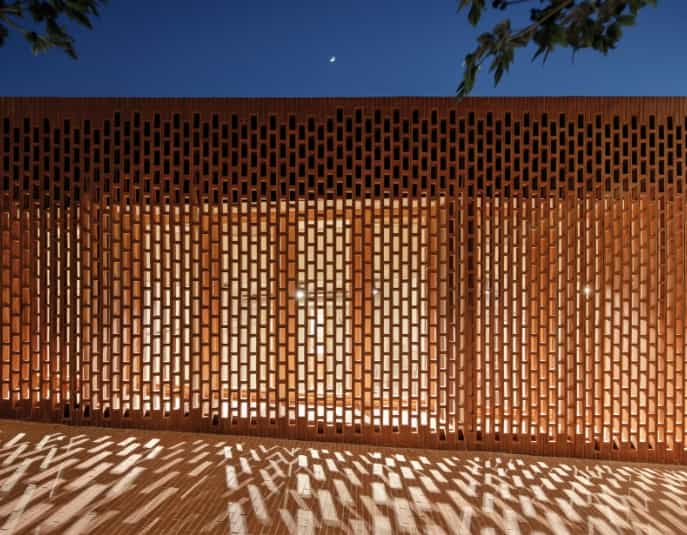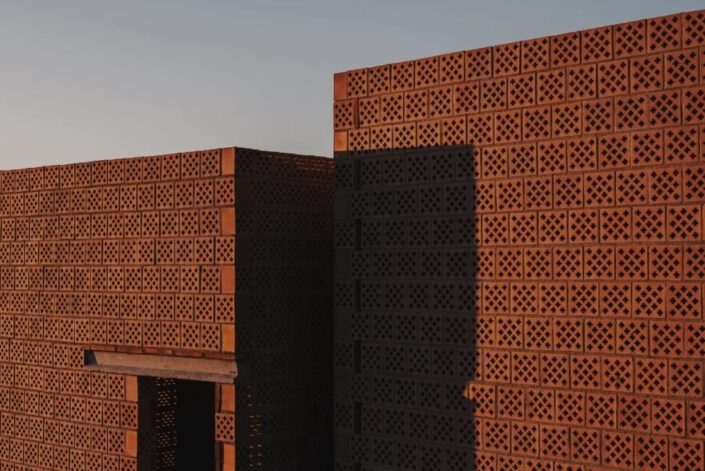
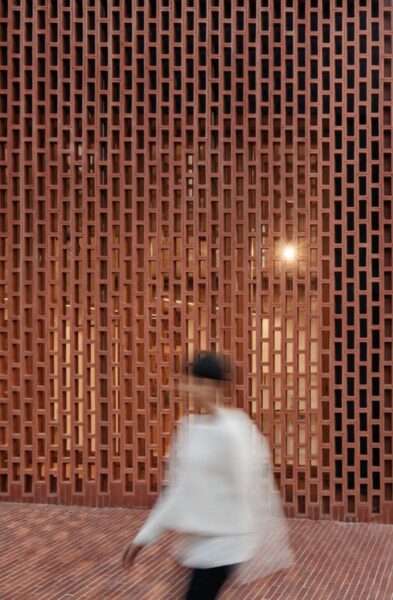
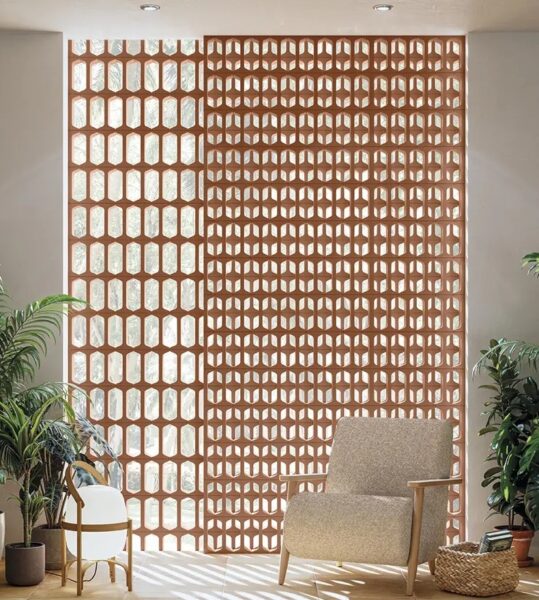
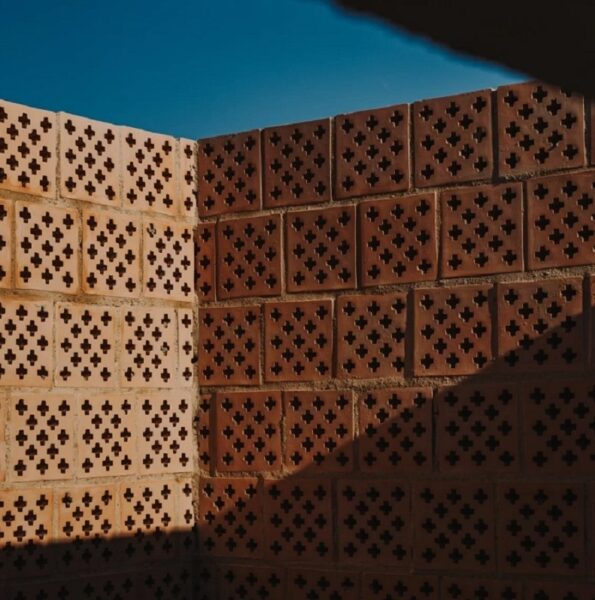
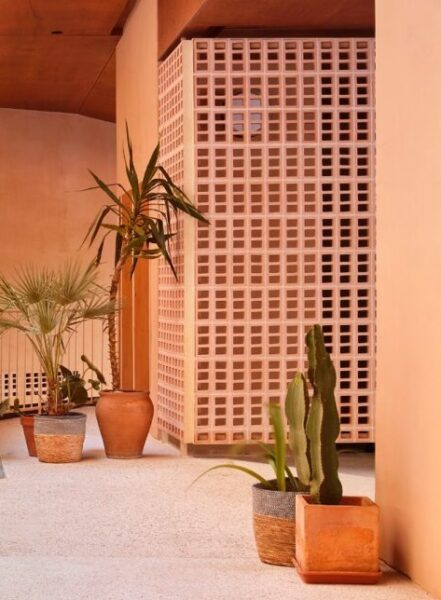
Perforated terracotta screens are traditional architectural elements found in warm climates. In the Mediterranean region, they are associated with agricultural activities; their presence typically indicates a space used for drying tobacco, aging wheels of Parmesan cheese, or rearing silkworms until they spin their cocoons. The reasons for their use are practical: they filter sunlight, enhance airflow through compression—much like the mechanism behind air conditioning—and contribute to the natural cooling of the space. Today, they are making a comeback in architectural design, valued both for the improved living conditions they provide and for their aesthetic appeal.
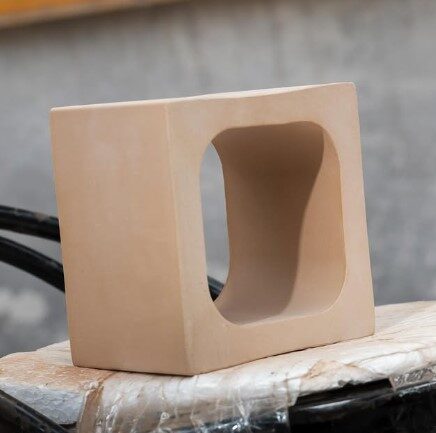
The ceramic *klostra* (decorative openwork blocks) in our collection are produced in many designs, using either low-temperature clay (earthenware) or non-porous, waterproof stoneware, depending on the requirements of the installation.
MINIMUM ORDER: 100 PIECES